
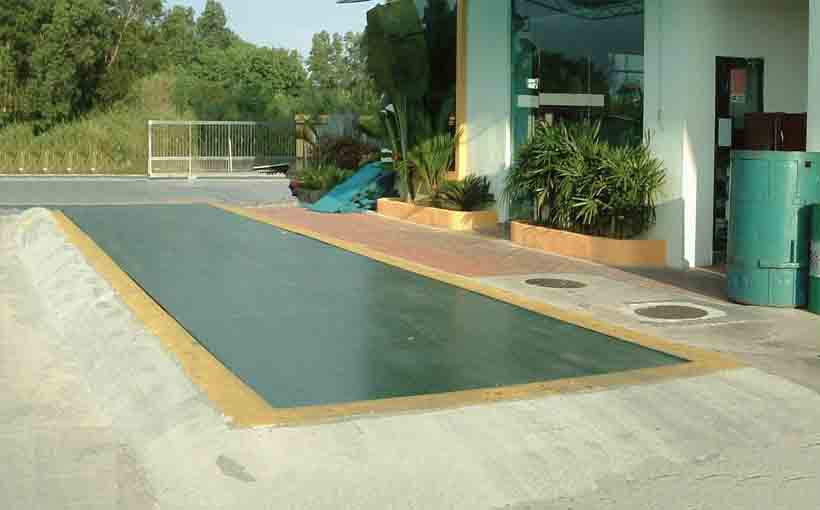
In the realm of industrial material management, the importance of accurate weighing cannot be overstated. This is where pit scales, also referred to as pit-type weighbridges, inground scales, or ground-level scales, come into play.
These essential tools provide a reliable and efficient solution for weighing heavy materials, ensuring precision and ease of use in various industrial applications.
Modern weighing bridge for trucks helps you maintain industrial efficiency and meet regulatory compliance by weighing large and heavy vehicles with pinpoint accuracy.
This article helps you understand how pit scales work, detailing their operational functionality, key components like load cells, and their industrial significance.
Exploring the Fundamental Mechanics Behind Pit Scale Operation
To understand their operating mechanisms, you need to examine two critical elements:
- Their physical architecture
- Systematic measurement process.
Pit scales feature a recessed pit with the platform flush to the ground, ensuring seamless access for your vehicles and efficient loading. At the heart lies a reinforced scale platform crafted from steel or concrete, embedded perfectly level within a prepared pit structure.
Beneath this industrial platform sit the unsung heroes – load cells acting as precision guardians. These weight-measuring workhorses come in various forms:
- Hydraulic systems convert physical force directly via fluid pressure.
- Compression models rely on mechanical resistance principles.
- Electronic strain-gauge sensors translate steel deformation into electrical fluctuations.
Here’s how the weighing magic unfolds:
- Vehicle Entry: Trucks drive directly onto the flush-mounted platform, simplifying positioning.
- Weight Capture: Strain-gauge sensors detect microscopic platform distortions. For example, a significant load might cause a slight shift in the millivolt signal.
- Data Routing: Electrical signals from the load cells are amplified and converted from analogue to digital.
- Information Display: Processed data appears instantly on weatherproof digital indicators or is fed into plant management systems.
The surrounding pit with its robust concrete embrace helps stabilise temperatures, preserving measurement consistency, while also protecting crucial parts from corrosive elements and physical damage. This precision engineering enables impressive accuracy in weight measurements.
These technical foundations set the stage for understanding why the in-ground configuration revolutionises logistics – a revelation explored in our next section.
The Strategic Advantages of In-Ground Pit Scale Design for Facilities
The true essence of a pit scale’s mechanism reveals itself through its in-ground and low-profile design. The scale platform is embedded entirely beneath your facility’s surface, sitting perfectly flush with the ground level. This strategic engineering creates:
- Superior Surface Space: Establishes a clear above-ground area, because it maintains an uncluttered ground level.
- Optimal Site Layout: Frees up valuable surface area by eliminating bulky entry and exit ramps.
- Enhanced Throughput: Enables smoother, continuous vehicle flow and easier vehicle entry and exit, directly boosting industrial efficiency.
Consequently, your warehouse or plant gains efficient vehicles and enhanced operational safety. The ground-level design significantly reduces risks, such as vehicle rollovers, which are often associated with elevated structures, thereby improving overall site safety.
An additional key benefit is that the underground installation of a pit weighbridge shields critical components from environmental factors. For instance, your high-quality load cells are protected from harsh weather exposure, like heavy rains, and accidental damage, resulting in:
- Extended durability and lifespan for components.
- Lower maintenance requirements for crucial parts.
Moreover, this seamless integration into your driveway minimises the physical footprint and aids processes like material management and inventory tracking.
Through quicker and less disruptive weighing operations.
To fully leverage these robust systems, understanding their upkeep is also essential, which we’ll explore further.
Essential Planning and Maintenance Guidelines for Reliable Pit Scale Functioning
How do pit scales work reliably over decades? Firstly, let’s remember one fundamental truth: long-term accuracy depends entirely on meticulous pit scale installation planning and unwavering commitment to regular scale maintenance. Like assembling a high-performance engine, every phase demands precision.
The initial phase begins where ground realities meet engineering. Thorough site assessments are mandatory to evaluate three critical factors:
- Space availability: Ensure there is adequate clearance for safe vehicle manoeuvres.
- Ground stability: The ground must have a load-bearing capacity suitable for the intended loads.
- Access routes: Ensure clear and unrestricted access for the types of vehicles that will use the weighbridge.
Once the site’s validated, your engineers should design a pit that can withstand environmental conditions and heavy use. Here, precision is key. Every pit dimension must align with the platform specifications to avoid structural stress.
Furthermore, a well-designed drainage system is absolutely essential to prevent water accumulation from compromising the sensors. Hence, you must integrate 6° sloped floors and paired dual-channel gullies.
The next step is to create foundations that are designed to stand the test of time. This phase of construction requires:
- Precision excavation to meet engineering tolerances.
- High-strength, reinforced concrete poured with structural reinforcement.
Ultimately, the true power and efficiency of a pit scale depend on how diligent you are with its upkeep. A badly-maintained and neglected pit scale can become inaccurate, unsafe, and unreliable.
To ensure your pit-type weighbridge operates reliably and maintains regulatory compliance, adhere to these key maintenance practices:
- Consistent drainage checks and cleaning
- Adherence to regular
- Load cell calibration
- Thorough inspections of the concrete structure and platform
- Structural integrity checks, including joint sealing, concrete inspection, and service hatches.
- Diligent record keeping of all maintenance and calibration activities.
Here’s what your maintenance schedule looks like:
- Daily: Keep drainage channels clear, which is especially critical before the monsoon season.
- Periodic: Check the platform joint sealing. Use high-quality, industrial-grade sealants for repairs.
- Quarterly: Verify the weighbridge’s structural integrity through appropriate load testing protocols. Include service hatches in the design for easy access.
For uninterrupted compliance:
- Schedule regular, certified calibrations in accordance with legal and industry standards.
- Digitise calibration records for real-time audit access.
Remember, your pit-type weighbridge only functions as well as your weakest maintenance link. Master planning and upkeep, and it’ll anchor your operations for decades.
Realising Efficiency and Compliance Through Pit Scale Technology
In essence, pit scales use their in-ground low-profile design and precision load cells to deliver crucial accuracy for your industrial needs. This design inherently enhances industrial efficiency, improves safety with ground-level access, and ensures regulatory compliance through consistent weighing.
Grasping how pit scales work and committing to maintenance directly unlocks dependability, ensures durability, and fosters operational excellence for you.
For expert industrial weighing solutions, including your ideal pit-type weighbridge in Chennai, Tamil Nadu, contact Giri Brothers.