
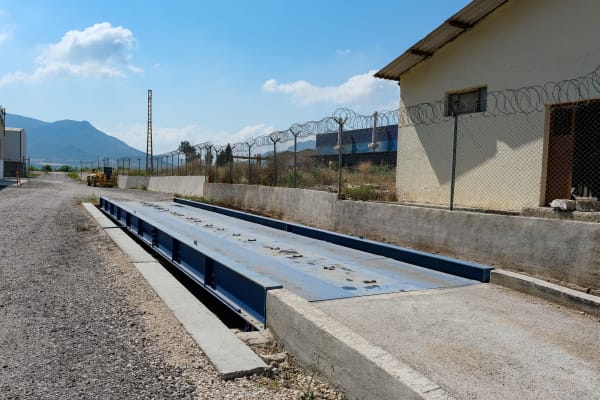
In key industries like logistics and construction, weighbridges are vital for daily operational efficiency. These scales provide precise vehicle and load measurements—essential for regulatory weight compliance and tracking shipments. This ensures you:
- Enhance your operational efficiency
- Improve worksite safety
- Boost overall productivity
However, selecting from the different kinds of weighbridges requires aligning with your specific business needs. This guide explores various weighbridge truck scales, assessing their operational fit for you. We’ll begin by analysing permanent weighbridges.
Which Type of Weighbridge is Best? Pit-Mounted vs. Surface-Mounted Options
Pit-mounted weighbridges are installed within a constructed pit, their platform flush with the ground and supported by load cells. This suits limited space availability, as vehicles access it without ramps.
This level design enhances traffic flow, making it ideal for heavy-duty applications and high throughput. However, installation is complex, demanding extensive groundwork, concrete, and drainage, which increases costs and potentially complicates pit maintenance.
Conversely, pitless (surface-mounted) weighbridges use load cells on a prepared base with an above-ground deck; vehicles access it via ramps. This offers quicker, cost-effective installation with simpler foundations and easier maintenance for above-ground components.
The trade-off? Ramps mean a larger footprint, impacting manoeuvrability in tight areas. For long-term weighing solutions with heavy use, pit-mounted systems provide better durability due to their embedded, vibration-dampening design.
While surface models offer some relocation flexibility, your choice between these types of weighbridges balances site constraints against throughput, with pits being common for permanent setups.
Understanding these foundational and spatial differences helps answer which type of weighbridge is best—while also preparing us to explore specialised portable and axle systems next.
Examining Portable, Modular, Axle, and Multi-Deck Weighbridge Applications
For industries requiring versatility beyond permanent setups, other types of weighbridges offer tailored solutions. These systems prioritise mobility, scalability, and specialised functions, adapting to operational demands without compromising durability.
Here’s how four key designs address diverse challenges:
- Portable Weighbridges: Portable weighbridges offer easy movement for temporary weighing applications. Ideal for temporary construction sites or remote locations, their quick deployment with bolt-together components avoids extensive civil works.
- Modular Weighbridges: Use interlocking steel modules for rapid deployment and scalability. Their relocation ease and durability suit the mining industry or construction industry needs in harsh environments, withstanding extreme temperatures and heavy debris.
- Axle Weighbridges: Perform individual axle weighing for axle weight distribution analysis—crucial for weight compliance. They aid in load balancing to maximise payload efficiency within legal limits.
- Multi-Deck Weighbridges: Feature multiple weighing platforms for detailed load analysis, such as monitoring different components of a vehicle’s cargo. Logistics providers and agricultural cooperatives use them for granular cargo insights.
These distinct kinds of weighbridges underscore how specialised solutions tackle site-specific challenges, setting criteria for the selection approach examined next.
Also Read: Weighbridge Buying Guide for Business Success and Longevity
Matching Weighbridge Types to Your Specific Operational Requirements
Choosing the ideal weighbridge for your business involves a strategic selection framework, starting with a comprehensive business needs assessment of your operational demands. This means thoroughly understanding your primary objectives—whether legal compliance, stock management optimisation for high-traffic sites, or processing a high volume of weighments daily.
To guide this analysis, start by interrogating key weighbridge selection criteria: what are the site’s constraints and environmental factors? For instance, can corrosion-resistant platforms withstand harsh salt-laden coastal climates? Furthermore, ask: which vehicle classes require weighing, what frequency, and what non-negotiable accuracy thresholds?
Equally vital is assessing compatibility with existing systems: could API-driven integration with enterprise resource planning software eliminate duplicate data entry errors across multiple depot locations? Similarly, evaluate if relocatable modular units better suit multi-site infrastructure projects versus permanent installations aligned to long-term operational goals like automated weighment-to-invoicing.
Addressing these considerations systematically ensures your final choice among various types of weighbridges. This structured approach aligns your selection precisely with operational realities—the key to avoiding misinvestment pitfalls.
Strategically Selecting Your Weighbridge for Optimal Performance
Choosing the right type of weighbridge is a critical decision that significantly:
- Impacts your operational efficiency
- Ensures strict weight compliance
- Directly influences long-term profitability
Understanding the different kinds of weighbridges—be they pit-mounted or modular systems—and meticulously applying a decision-making framework (for weighbridge choice) remains the proven pathway to matching industrial-grade solutions to your exact operational realities.
Looking to implement reliable weighing and billing solutions tailored to your industry? Giri Brothers in Chennai, Tamil Nadu, offers customised consultations. Proven expertise to elevate your weighing infrastructure—precision engineered, built to last!